
Now Live: the AI Brand Index.View rankings
SupaIntent logoSupaIntent
5.0Source: G2.com, Inc.

Track AI citation sources
behind buyer answers

See which URLs help competitors win your buyers' prompts, and turn them into clear priorities for PR, content and marketing teams.

7-day free trial · 2-minute setup · cancel anytime

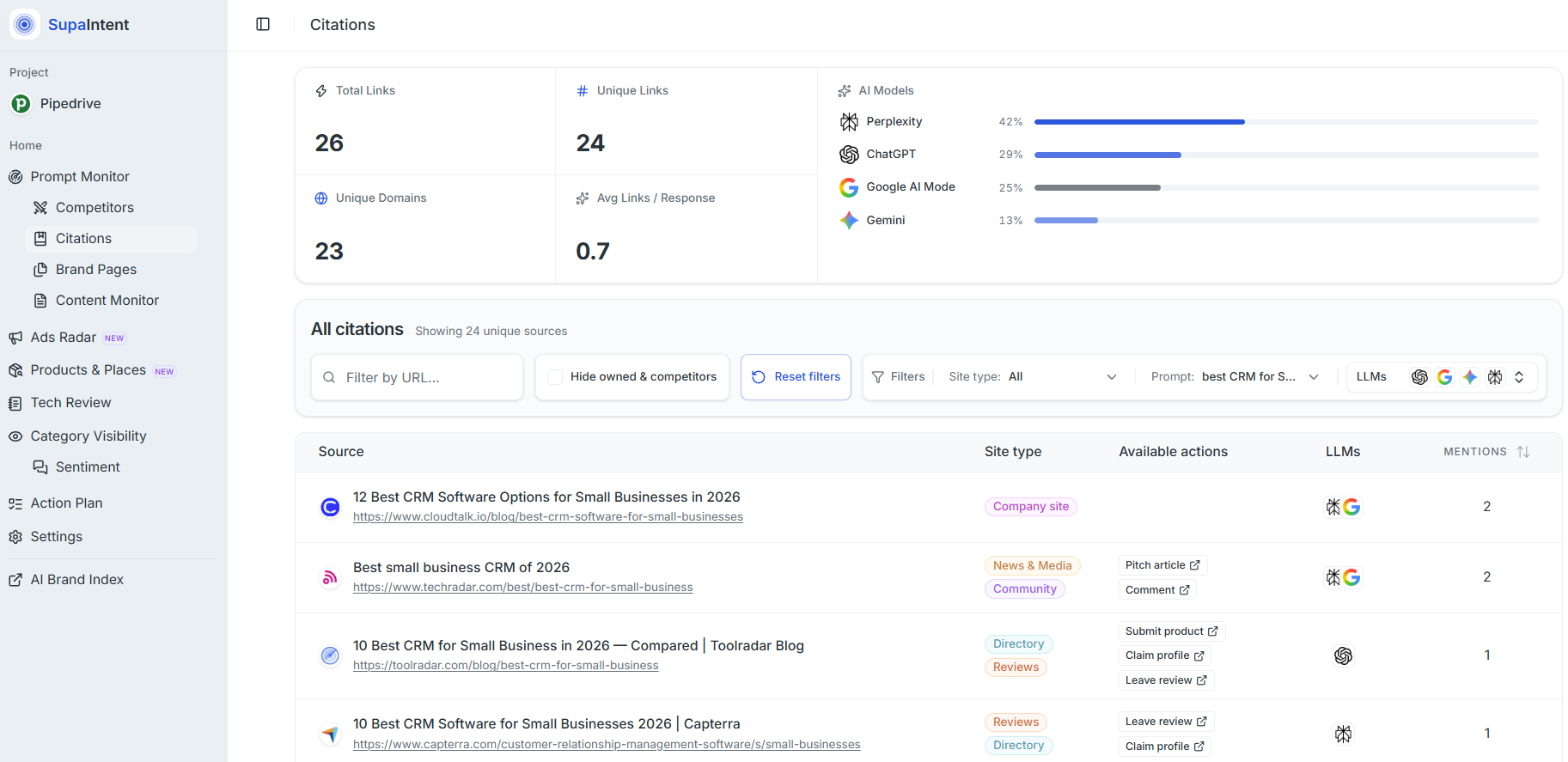
SupaIntent Citations dashboard showing citation totals, AI model distribution, filters, source types, available actions, and mentions.

From buyer prompt to next move

  1. 01

    Capture the real answers

    Check the buyer prompts that matter every day across the AI engines your customers use.

    Buyer promptbest CRM for sales teams
    ChatGPTGeminiGoogle AI ModePerplexity
  2. 02

    Rank the sources

    Group citations by URL, prompt, source type, and AI engine.

    Owned page
    Industry list
    Review profile
  3. 03

    Act on the gap

    Send the evidence to content, PR, reviews, or partnerships.

    Improve pagePitch publicationStrengthen profile

Turn cited sources into the next move

For every cited URL, see the evidence behind the answer, what your team can influence, and where to act first. Pair it with AI Visibility Tracking to keep the prompt, answer, and source in one view.

01Evidence
See the evidence behind the answer
Open the cited URL with the buyer prompt and captured AI answer
02Priority
See what your team can influence
Separate owned, competitor, and third-party sources, then prioritize URLs that appear most often
03Handoff
Assign the next move
Improve a page, pitch a publication, strengthen a review, or claim a profile
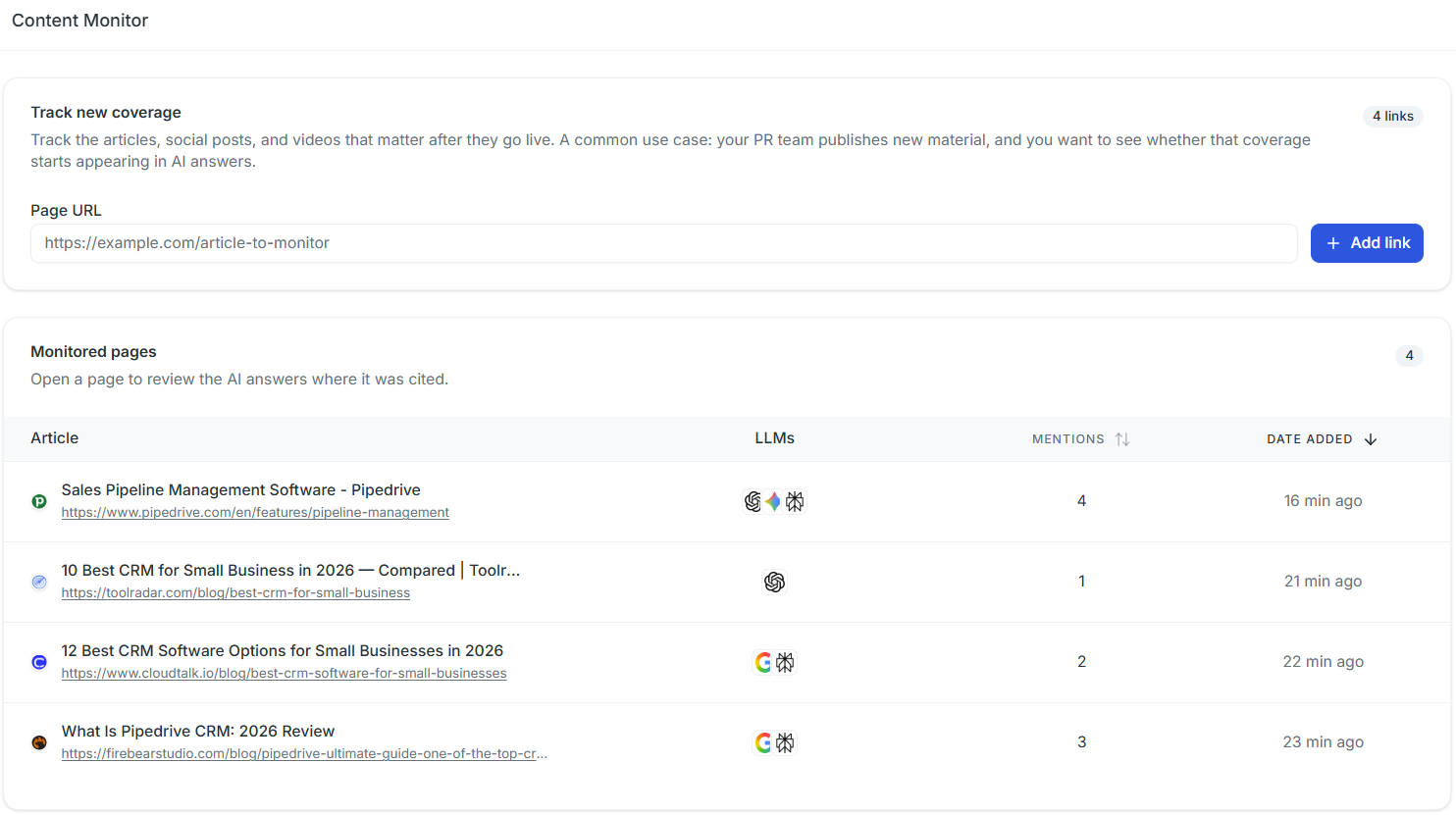
See whether the placements you earn get cited

Track every URL your team publishes or earns, from your website and Reddit to Capterra and other third-party sources. See which placements start appearing in AI answers and where to build on the result.

SupaIntent Content Monitor showing tracked placements and whether they are cited by AI engines.

Features

The citation evidence your team needs to understand the source behind an AI answer and act on it.

  • Citation Source Discovery

    See every URL cited for a tracked buyer prompt, with the AI engine, answer, and source type attached.

  • Competitor Source Gaps

    Find the URLs competitors earn citations from, then identify the source gaps behind lost buyer answers.

  • Placement Citation Monitoring

    Add pages, PR coverage, community posts, review profiles, and listings. Track whether each placement begins appearing in AI answers.

  • Source Type Filters

    Separate owned, competitor, and third-party sources, so each citation has a clear owner and next move.

  • Citation Priority Ranking

    Rank sources by how often they appear across tracked prompts and AI engines to focus your next effort.

  • Evidence-Ready Handoffs

    Keep the prompt, AI answer, cited URL, and next action together for content, PR, and marketing teams.

Citation Source Use Cases

How teams turn cited URLs into content, PR, review, and marketing priorities.

  • Plan content around cited sources

    Find the pages AI already relies on for buyer questions, then decide which owned content needs to be created or improved.

  • Measure PR and placement impact

    Monitor whether earned coverage, community posts, and partner placements begin appearing in the AI answers your buyers see.

  • Strengthen reviews and directories

    Compare review profiles and directory listings that receive citations, then prioritize the proof your category depends on.

  • Brief marketing teams with evidence

    Give content, PR, and marketing a shared source brief connected to the exact prompt and AI answer behind the work.

Frequently asked questions

What does SupaIntent show beyond a citation count?

SupaIntent connects every cited URL to the buyer prompt and captured AI answer behind it. Your team can see which brands were recommended, which URLs AI cited alongside them, and why those sources matter.

Which AI engines does SupaIntent track?

SupaIntent tracks buyer prompts across ChatGPT, Google AI Mode, Gemini, and Perplexity, so teams can compare citations and brand presence across the AI engines their customers use.

How often is citation data updated?

SupaIntent runs tracked prompts daily. That gives your team a consistent view of changing answers, competitor citations, and source opportunities without manual checks.

Can we track whether a new placement gets cited?

Yes. Add the URLs your team publishes or earns, including pages on your site, Reddit discussions, Capterra profiles, and other third-party placements. SupaIntent shows whether they begin appearing in AI answers.

Can we separate our sources from competitors and third parties?

Yes. Filter owned, competitor, and third-party sources separately. This helps teams distinguish between pages they can improve, placements they need to earn, and competitor coverage that explains a lost answer.

How does SupaIntent help us decide what to do next?

SupaIntent ranks sources by citation frequency and keeps the prompt and answer attached. Turn the evidence into a clear next move: improve a page, pitch a publication, strengthen reviews, or claim a directory profile.

Who is citation source analysis for?

It is built for SEO and AEO, content, PR, and marketing teams that need to turn AI search evidence into work their team can execute and measure.

What counts as an AI citation?

A citation is a URL AI includes or relies on in a captured answer for a tracked buyer prompt. SupaIntent keeps that URL connected to the prompt, AI engine, answer, and source type, so your team can assess it in context.

Do we need to monitor placements manually?

No. Add the URLs that matter, then SupaIntent checks whether they appear in tracked AI answers. Use the result to decide whether to improve the page, build more proof, or invest elsewhere.

Start tracking

Know why competitors win the answer

Find the sources behind your buyers' prompts and turn them into the next content, PR, review, or partnership move.

7-day free trial · 2-minute setup · cancel anytime